
Discover
Our more Services

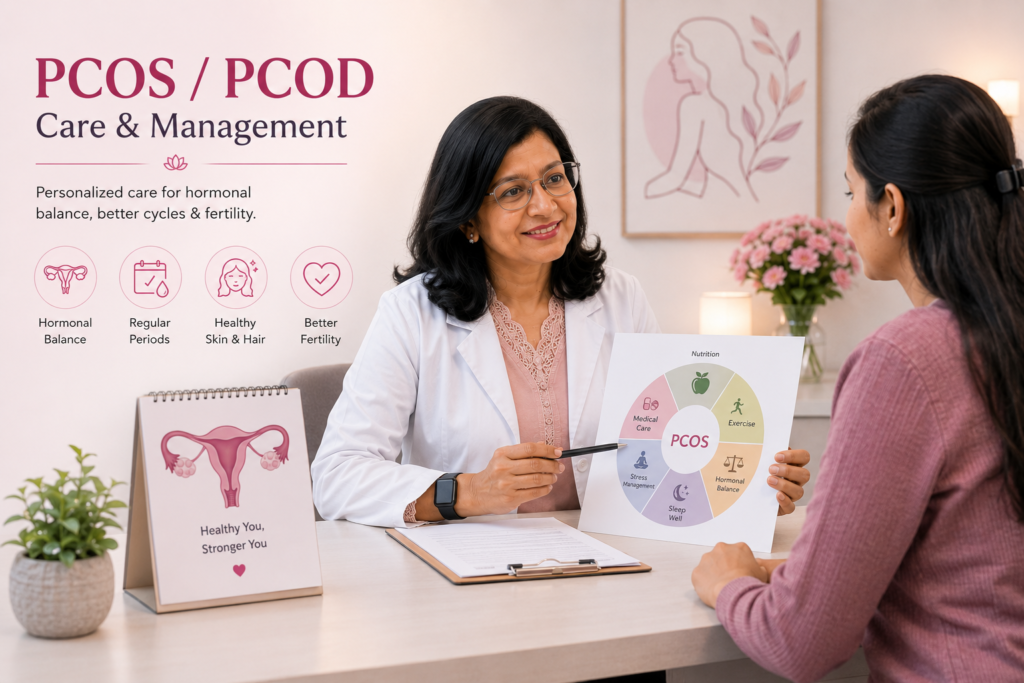
PCOS (Polycystic Ovary Syndrome), also commonly referred to as PCOD, can affect ovulation, menstrual cycles, hormones, and fertility. With the right evaluation and individualized management, many women with PCOS can successfully achieve their reproductive goals.
Dr. Gargi Pal provides personalized care based on your symptoms, menstrual pattern, hormonal profile, fertility goals, and overall reproductive health.
Common Challenges Associated with PCOS / PCOD?
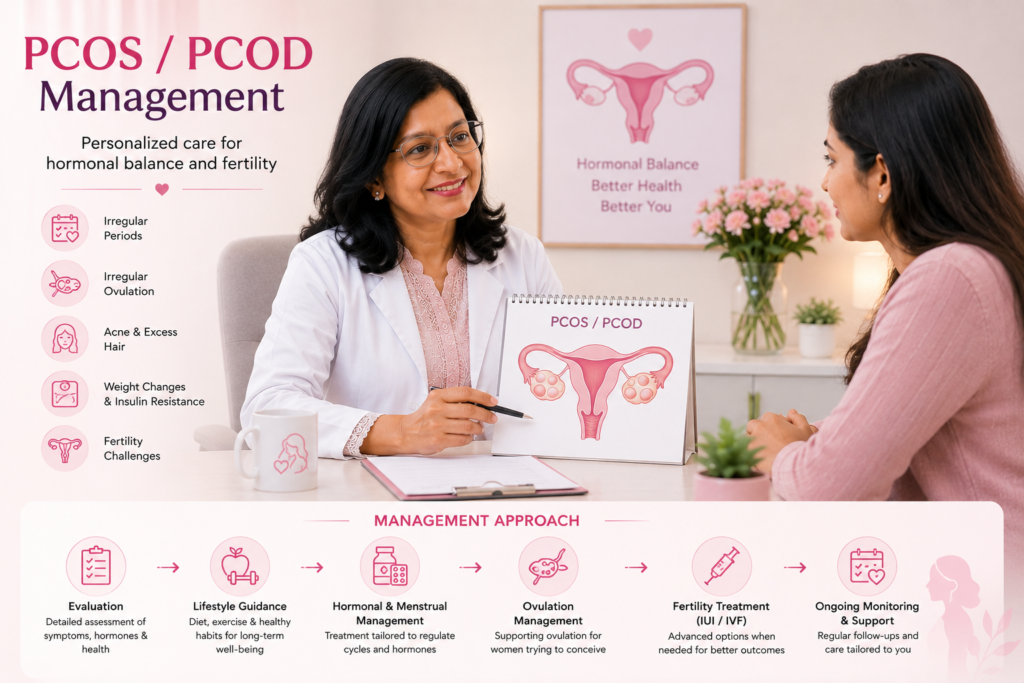
PCOS may be associated with:
Not every woman experiences the same symptoms, which is why an individualized assessment is important.
How Does PCOS / PCOD Managed?
Your medical history, menstrual cycle, symptoms, and fertility goals are reviewed. Appropriate blood tests and ultrasound evaluation may be recommended when required.
Healthy eating, regular physical activity, adequate sleep, and sustainable lifestyle changes can form an important part of PCOS management.
Depending on your symptoms and reproductive goals, appropriate treatment may be recommended to help manage menstrual irregularities and hormonal concerns.
For women trying to conceive, treatment may focus on supporting regular ovulation. Ovulation-inducing medication may be considered when appropriate.
If pregnancy does not occur with initial management, fertility treatments such as IUI or IVF may be considered depending on the individual fertility assessment.
Regular follow-up helps assess your response to treatment and allows the management plan to be adjusted when needed.
Personalized PCOS / PCOD Care
Choosing donor sperm is a personal decision that can involve medical, emotional, and practical considerations. Dr. Gargi Pal takes time to understand your circumstances, explain the available options, and create a treatment plan suited to your individual fertility needs.
With compassionate guidance, careful evaluation, and personalized treatment planning, you can move forward with greater clarity and confidence.
— Answer’s to the questions
Frequently Asked Questions
Donor eggs may be considered for women with significantly reduced ovarian reserve, premature ovarian insufficiency, poor egg quality, repeated unsuccessful IVF cycles, or certain genetic or medical circumstances.
Yes. Donated eggs are fertilized in a laboratory as part of an IVF treatment cycle.
Yes, ICSI may be considered when clinically appropriate, particularly when there are concerns related to sperm quality or previous fertilization.
Usually, the recipient’s uterine lining needs to be prepared appropriately before an embryo is transferred. The medication and monitoring schedule are individualized.
No. Egg donation can provide an important fertility option, but no fertility treatment can guarantee pregnancy or a live birth.
With donor eggs, the child is not genetically related to the woman who provides the uterus and carries the pregnancy through the donated egg. The genetic contribution from the egg comes from the donor, while the sperm contributes the paternal genetic material.
Take the next step
Considering egg donation can bring many questions, and you do not have to make the decision alone.
Book a consultation with Dr. Gargi Pal to discuss your fertility history, understand your options, and find out whether egg donation may be appropriate for your journey toward parenthood.
Your journey is unique. Your care should be too.
Supporting Your Journey Towards Parenthood.

© 2026 Dr Gargi. All Rights Reserved.