Irregular Periods? Here’s What It Means for Conception
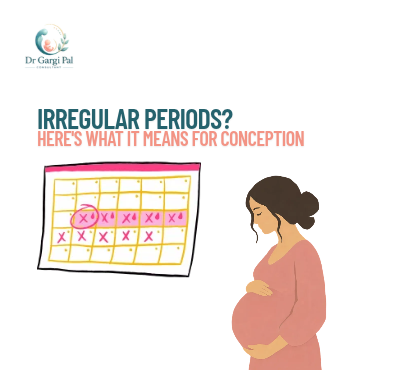
A menstrual cycle can offer useful clues about reproductive health. When periods arrive on different dates every month, become unusually far apart, or are missed for several weeks, it is natural to wonder whether conception will be difficult. Irregular periods do not automatically mean that pregnancy is impossible. However, they can make it harder to predict ovulation and may sometimes point to a health condition that needs attention. For couples trying to conceive, understanding the reason behind an irregular cycle is more helpful than simply counting dates or relying on guesswork. Ovulation, the release of an egg from the ovary, is an important part of natural conception. If ovulation happens infrequently or unpredictably, the available time to conceive may be less certain. In some cases, the same hormonal or reproductive condition that affects periods may also influence fertility. The right approach depends on a person’s age, medical history, cycle pattern and how long pregnancy has been attempted. This guide explains what irregular periods may mean for conception, common reasons for cycle changes, the tests a doctor may recommend and practical steps that support menstrual and reproductive health. What Is Considered an Irregular Period? A menstrual cycle is counted from the first day of one period to the first day of the next. Cycle length can vary, and a small difference from month to month is not necessarily a problem. In adults, cycles that are consistently shorter than about 21 days or longer than about 35 days are generally considered outside the usual range. A cycle that changes substantially from one month to another, or periods that are repeatedly missed, also deserve attention. Irregularity can appear in different ways. Periods may come early in one month and much later in the next. Bleeding may be very light, unusually heavy or last longer than expected. Some people may have only a few periods in a year, while others may experience spotting between periods. The pattern matters because different causes can produce different changes. It is useful to record the first day of bleeding, how long it lasts and whether there is pain or unusual flow. A calendar or period-tracking app can help identify patterns, but it cannot confirm whether ovulation has occurred. A clinician will interpret this information along with symptoms and medical history. How Do Irregular Periods Affect Conception? Irregular periods can affect conception mainly by making ovulation less predictable. In a typical ovulatory cycle, an ovary releases an egg. The egg remains available for fertilisation for a limited period, while sperm can survive in the reproductive tract for several days. Pregnancy is therefore most likely when intercourse takes place during the fertile window around ovulation. When cycles are irregular, it becomes difficult to estimate this window using calendar dates alone. Ovulation may occur later than expected, may happen at different times in different cycles, or may not occur in some cycles. If ovulation does not take place, there is no egg available for fertilisation in that cycle. This can reduce the number of opportunities to conceive over time. Irregular periods may also be associated with conditions that influence egg development, hormone levels, the uterine lining or other aspects of reproductive health. For example, polycystic ovary syndrome (PCOS) can be associated with irregular ovulation. Thyroid disorders and raised prolactin levels may also disturb menstrual function. These conditions do not affect everyone in the same way, and many are manageable with appropriate care. It is important not to assume that every person with irregular periods has an ovulation problem or infertility. Some people with variable cycles do ovulate and conceive naturally. Others may need assessment or treatment to improve the chances of pregnancy. Finding the cause is the first practical step. Common Causes of Irregular Periods Polycystic ovary syndrome (PCOS): PCOS is a common hormonal condition that can affect ovulation. Periods may be infrequent, widely spaced or absent for months. Some people also notice acne, increased facial or body hair, scalp hair thinning or weight changes, while others have few visible symptoms. PCOS is diagnosed using a combination of clinical history, examination, blood tests and, when appropriate, ultrasound findings. An ultrasound alone does not establish the diagnosis. Thyroid hormone imbalance: The thyroid gland helps regulate several body functions, including menstrual activity. Both an underactive and an overactive thyroid can contribute to cycle changes. Fatigue, changes in weight, sensitivity to heat or cold, palpitations or changes in bowel habits may occur, but symptoms vary. A blood test can help assess thyroid function. Raised prolactin levels: Prolactin is a hormone involved in breast milk production. When levels are higher than expected outside pregnancy or breastfeeding, ovulation and periods may be affected. Some people experience milk-like nipple discharge, headaches or visual symptoms, while others notice only menstrual changes. A doctor may recommend a blood test and further evaluation depending on the result. Stress, sleep and major routine changes: Ongoing stress, inadequate sleep, intense exercise, sudden weight loss or significant changes in food intake can affect the hormonal signals that regulate ovulation. These factors may be temporary, but persistent changes should not automatically be attributed to lifestyle without checking for other causes. Body-weight changes and nutrition: Being significantly underweight or having a higher body weight can influence reproductive hormone function in some individuals. Restrictive eating, nutritional deficiencies and rapid weight changes may also disrupt cycles. The aim should be steady, sustainable health habits rather than crash diets or unverified fertility plans. Perimenopause and age-related changes: As a person approaches menopause, hormone patterns can become less predictable and periods may change in timing or flow. Age also affects fertility, particularly through changes in egg quantity and quality. Irregular cycles at this stage should be discussed with a clinician, especially if pregnancy is desired. Other reproductive or medical conditions: Conditions affecting the ovaries, uterus or pituitary gland, certain long-term illnesses and some medicines may contribute to menstrual changes. Previous pelvic procedures or treatments may also be relevant. The possible causes are varied, so an individual assessment is
Sterility vs. Infertility: The Critical Difference
Questions about fertility can be difficult to discuss, especially when a couple is trying to conceive and receiving mixed information from family, friends, or online searches. Two terms that often create confusion are sterility and infertility. They are sometimes used as though they mean the same thing, but in medical discussions they can describe different situations. Infertility generally refers to difficulty achieving a pregnancy after a period of regular, unprotected sexual intercourse. Sterility is often used to describe a situation in which natural conception is considered not possible, although the word is used differently across clinical settings and should not be treated as a diagnosis based on a single test. The distinction matters because the reasons behind difficulty conceiving vary, and some may be treatable or manageable with medical support. Neither term should be used to assign blame to one partner. Fertility depends on several factors, including ovulation, sperm production and movement, the fallopian tubes, the uterus, sexual health, age, and general medical conditions. A balanced evaluation usually considers both partners. Understanding the terminology can help couples ask clearer questions, seek timely care, and make decisions based on their own medical findings rather than fear or assumptions. What Does Infertility Mean? Infertility is commonly defined as a condition in which pregnancy has not occurred after 12 months or more of regular, unprotected sexual intercourse. The timing for evaluation may be earlier depending on age, medical history, menstrual patterns, or known fertility concerns. Infertility does not always mean that pregnancy is impossible. It describes a difficulty conceiving that needs appropriate assessment to understand possible causes and options. Some couples conceive without treatment after a longer period, while others may benefit from medical treatment or assisted reproductive techniques. The outlook depends on the cause, age, duration of trying, reproductive health, and other individual factors. A general label cannot predict a person’s chance of pregnancy accurately without an evaluation. Infertility can involve female reproductive factors, male reproductive factors, a combination of factors, or circumstances in which investigations do not identify a clear cause. This last situation is sometimes called unexplained infertility. It does not mean that the difficulty is imaginary; it means that routine tests have not established a specific explanation. What Does Sterility Mean? Sterility is often used to describe the inability to achieve conception naturally. In practice, the term may be used in different ways, and it is not always a precise or preferred label in modern fertility care. A person may be told that a particular condition makes natural conception very unlikely, but the implications depend on the diagnosis and the available treatment options. Certain reproductive conditions can prevent sperm and egg from meeting, or can severely affect the production of eggs or sperm. Even then, the word “sterile” should not be applied casually. Some conditions that make natural conception difficult may still have treatment options, including procedures or assisted reproductive methods, depending on individual circumstances. A diagnosis should be explained in specific terms: what has been found, how it affects conception, whether the issue is temporary or permanent, what remains uncertain, and which options may be appropriate. If a clinician uses the word sterility, ask what it means in the context of your test results and whether it refers to natural conception, all forms of pregnancy, or a particular medical condition. Sterility vs. Infertility: The Key Difference The simplest way to understand sterility vs infertility is that infertility describes difficulty achieving pregnancy, while sterility is often used for an inability to conceive naturally. However, the terms can overlap, and medical teams may prefer to describe the specific reproductive condition rather than use “sterility” as a broad label. Infertility is a clinical term that commonly leads to evaluation of both partners and a discussion of possible causes and treatment choices. Sterility may be used when a factor is believed to prevent natural conception, but it does not automatically tell you whether pregnancy might be possible with medical assistance. The details of the diagnosis matter more than the label alone. It is also important to distinguish infertility from miscarriage. Infertility concerns difficulty achieving pregnancy, while recurrent pregnancy loss concerns pregnancies that begin but do not continue. These situations may require different investigations, although some couples can experience both challenges. Fertility is not determined by one symptom or one test. Menstruation that appears regular does not confirm that every part of the reproductive process is functioning normally, and a single semen analysis does not always tell the full story about male fertility. Results need to be interpreted alongside medical history and, where appropriate, repeat or additional tests. Common Causes of Infertility Infertility can arise from several conditions, and more than one factor may be present at the same time. Identifying the cause is useful because treatment should be directed towards the person’s findings rather than chosen solely on the basis of how long the couple has been trying to conceive. Ovulation-related concerns If an egg is not released regularly, the chance of conception may be reduced. Causes can include polycystic ovary syndrome (PCOS), thyroid disorders, elevated prolactin, significant weight changes, excessive exercise, or other hormonal factors. Irregular periods, very long cycles, or absent periods may be reasons to seek evaluation, though ovulation problems can sometimes occur without obvious symptoms. Age-related changes The number and quality of eggs change with age, and fertility generally declines as a woman gets older. Age can influence the time available for evaluation and treatment decisions. This does not mean that every older woman will experience infertility, but it is one reason not to delay seeking advice when pregnancy has not occurred. Fallopian tube problems The fallopian tubes help the egg and sperm meet and allow the early embryo to move towards the uterus. Tubes may be blocked or damaged by previous pelvic infections, endometriosis, abdominal or pelvic surgery, or other conditions. A tubal problem may not cause noticeable symptoms, so a person may not know about it until fertility testing. Uterine conditions Fibroids, polyps, congenital differences